|
|---|


Tuesday, 16 June 2009
Iggy does the media rounds
Update: Click here to view the At Issue Panel last night that I was referring to
Yesterday, Ignatieff was working the media circuit. Here is some footage from his appearances on Don Newman, the National and Newsworld. Commentators on the "At Issue" Panel yesterday did not think the Liberal leader had a good day.
-Darryl
Don Newman
CBC National
CBC Newsworld
Friday, 12 June 2009
Pros and Cons from Iggy's Perspective of forcing an election
Apparently today or Monday, Michael Ignatieff is going to tell Canadians if he plans to force an election on one of the opposition days or if he will abstain allowing the government to survive through the summer at least. There has been a lot of speculation on the odds of an election ranging from no chance to a 85% chance of Canadians hitting the polls this summer. Let us first look at the facts.
1, Canadians last went to the polls late in 2008. The current minority parliament has not yet lasted a year.
2, Since the time of Dion’s leadership, Conservatives have largely governed with the support of the Liberals on confidence votes.
3, A coalition was formed in December and January of this year. It was rejected by Canadians and as a result Ignatieff supported the budget and killed the coalition.
4, Since the coalition, several recent polls consistently indicate Liberal support ahead of the Conservatives with Liberal fortunes improving in the 905, Quebec and BC.
5, The NDP and Bloc are on record as recently as yesterday suggesting they will not support the government.
6, The NDP would likely lose seats to the Liberals in the event an election took place in the near future.
7, The BQ might lose seats around Montreal but are likely to pick up seats around Quebec City. Several Bloc members qualify for full pensions starting in July.
8, It appears Stephen Harper will not back down on EI due to the already large deficit
9, Based on his voting record and statements; there are not many policy differences between Stephen Harper and Michael Ignatieff at this point in time.
10, Canadians do not want an election and could get angry if politicians spend another 600 million on the fourth election in five years only to get another minority during these economic times.
Based on those facts, here are some reasons Ignatieff might avoid an election:
-He will look opportunistic should he decide to go to the polls. He voted for the budget, the Afghanistan extension, Harper’s justice policies and has supported the Harper Conservatives on virtually all confidence votes since he was elected leader. His only policy difference right now with the Conservatives is this EI policy proposal that has not caught on with Canadians. During this recession, Canadians will want to see an alternative vision to what the current government has implemented. EI is not an election winner and no platform or ideas have come out at this point in public. Kelowna Accord, national childcare and other recycled Liberal policies are not affordable unless he either raises taxes or cuts spending elsewhere. If his argument is that the stimulus isn’t being spent fast enough, he will have to explain how an election will speed it up. If he complains about the size of the deficit, he will have to tell Canadians what programs he will cut or what taxes he will raise in order to reduce it. At this point, he lacks a defining issue that would resonate with Canadians on the election trail. He lacks a policy Canadians are excited about. He lacks a scandal that Canadians are angry about. At this point all he has is a few polls in his favour and a lot of voters hurting because of the recession. While he leads in the polls, a win is not a slam dunk for him right now.
-Although he has a lead in several polls, the lead is not as large as some would expect given the economic crisis that would be tough on any incumbent government. Any backlash for calling an unnecessary election or a successful negative campaign by the Conservative Party could result in him losing the next election. If that happens will his leadership be safe?
- Liberals are just starting to nominate candidates now and have so far yet to recruit any new blood. A few potential stars have been rumoured such as Louise Arbour, Phil Fontaine and David Dodge but to my knowledge none of these people are officially confirmed as running for the Liberals in the next nomination. Some incumbents did not meet the requirements and will now face a nomination race. Others could potentially retire. If the plug is pulled on June 19, do Liberals have enough time to get the quality candidates in place? Obviously money, technology, volunteers and platform are other areas where it is unclear if Liberals are ready to fight an election.
- If Ignatieff waits, do his chances of victory or majority improve? Economy while showing signs of recovery could still not have hit rock bottom. Some have predicted the economy will recover by the end of the year. Others predict it will take much longer. If Ignatieff pulls the plug now, does he risk missing a majority that could be attained should he wait until the fall or spring?
- The summer presents a good opportunity for Iggy to work the BBQ circuit and become better known to Canadians. While universally considered superior to Dion; it is not exactly Iggymania at this stage. It is also unknown how damaging the last round of Conservative attacks were and how damaging future attacks might be.
Based on the same facts, here are some reasons he might call an election now or at least vote non-confidence:
- When Stephane Dion was leader, he found himself in a nasty trap that made him look weak thanks to the NDP and the Bloc. The reason for that trap was Dion wanted to avoid an election more than any of his opponents. As a result he abstained and propped up Harper leading to Rick Mercer and others making a mockery of him as leader. Dion never was able to shake the image and it cost him in the last election. Michael Ignatieff wants to avoid this happening to him, but so far he has been unsuccessful. When the coalition was rejected by Canadians and Conservatives were polling at over 50%, Ignatieff was appointed leader and had to support the budget in order to avoid an election and distance himself form the coalition. While he could claim he forced some concessions, the NDP/Bloc accused him of forming a “coalition” with Harper. Today Iggy is stronger than Dion ever was, but as I mentioned in point one of why he may not call an election; he has yet to differentiate himself or paint an alternative vision to Harper and the Conservative Party. The NDP and Bloc have again attempted to lay the same trap by coming out early and saying they will oppose the government on upcoming confidence votes. Iggy may want to call their bluff to break this cycle of having to abstain or prop up the government to avoid an election. The fact of the matter is the NDP would have their seats reduced if an election were called anytime soon and Layton’s leadership could be threatened. 16 Bloc members could find themselves gambling with their pensions if an election takes place before July. If Ignatieff comes out today or Monday and says he is voting non-confidence; it is quite possible that Layton would back down and pay a price with his credibility. If not, an election might be a better alternative for Liberals than looking weak. Certainly they have more incentive to hit the polls than the NDP and have no reason to back down as they have in the past. Announcing that Liberals will no longer support the government could break this pattern even if there is no election.
- The polls are currently showing that the Liberals would win if an election took place right now. The NDP and Bloc have said they will vote non-confidence. This might be Iggy’s best and only chance to win. The economy is bad right now but is showing signs of recovery. A budget could later be turned into a campaign document and perhaps appease the Conservative base currently upset about spending, bailouts and deficits. Harper would also have the opportunity to be Prime Minister during the Vancouver Olympics perhaps spiking his popularity. If the economy recovers, Conservatives will get credit. Is there a risk of backlash? Yes. Do Liberals have a platform? No. Are Liberals truly ready for an election? Perhaps not as ready as they would be in the fall or spring. Despite this, these opportunities do not come everyday. Passing on this opportunity may come back to bite him later.
- Conservatives have gained some baggage. The budget is a record in Canadian history. Spending has increased. The auto bailout is not popular. Unemployment is up. There is not money to promise much or to load pork into ridings. Conservatives are in freefall in Quebec. The situation in Southern Ontario is not looking very good. There is Lisa Raitt and a few other Ottawa scandals. There is some concern a lot of Conservative voters could stay home in the next election. Harper’s positives are equal to Ignatieff but his negatives are much higher. It is tough to convince regular Canadians that the government is on the right track when economic times are so tough. All of these issues may not be there six months from now.
- Canadians will be angry about an election being called, but those Canadians are more likely to stay home altogether than vote Conservative to send a message to Ignatieff for calling the election. Canadians did not want an election in 2004, 2006 and 2008 either.
- Liberals do not like being in opposition. It is a party motivated more by power than policy. It will be too tempting to avoid an election when they are up in the polls and can taste government and all the perks that come with it.
Chances of an election:
I would not be surprised if Canadians vote in July and I would not be surprised if we don’t. Here is what each leader has to consider.
Stephen Harper – an election is largely out of his hands. He could roll the dice and back down on EI and implement the Liberal proposal. Doing so might buy him time but it would further alienate the base.
Michael Ignatieff – will put a non-confidence motion forward so at worst he does not look weak and sends a message to the NDP/Bloc or at best causes an election he believes he can win. Only way he backs down is if internally the party is not ready for an election or if he lacks confidence in his chances for victory. I suppose he could back down and say “Canadians do not want an election” but ultimately that would mean supporting Harper again. This hurts his chances in the fall or later for the same reasons that are creating obstacles right now.
Jack Layton – has constantly accused the Liberals of supporting Harper and being absent in their role as official opposition. Claims Iggy has just recently championed EI, while the NDP has been fighting this battle for years. He would love to vote against Harper, but if he thinks Liberals will too and can’t be sure of Duceppe’s plan; next to the Conservatives, he probably has the most to lose if an election happens this summer. The ultimate flip flop might cost him his credibility but it is better than his job along with half his caucus. Iggy putting forward a confidence motion on EI would put the NDP into an impossible position of sacrificing their credibility vs. getting destroyed in an election campaign. Ultimately over the long term the results would be the same. I believe Layton is the most likely to back down.
Gilles Duceppe – some members may not want to lose their pension, but there isn’t much to gain or lose if the Bloc goes into an election. Seats they lose to the Liberals they would likely make up by winning seats from the Conservatives. There is no challenger to Duceppe at this point. Some Bloc members might abstain to protect their pensions and to avoid an inconvenience of a summer election. Unlike the NDP however, they have much less reason to fear an election.
Overall, I put the odds of an election at 75% but would not be too surprised if at the end of the day a summer election is avoided. What is clear is that every confidence vote from now on will be a risk that the government falls.
Thanks for reading…
Darryl

Sunday, 24 May 2009
Liberals will raise your taxes provincially and federally
Credit: Toryboy1 on YouTube
Monday, 18 May 2009
Liberal Party Attack Ad from 2006
I really like the accusation that Stephen Harper would be willing to work with the Bloc or sending Canadian troops to Iraq. This ad proves Liberals are no strangers to going negative and the accusations are interesting given Michael Ignatieff's current leadership of the Liberal Party. They have also had their attack ads going on for months.
-Darryl
Saturday, 16 May 2009
Libertarian Party of Canada runs negative ad against Michael Ignatieff
0 comments Posted by 2011 at 12:19Libertarian Party of Canada runs negative ad against Michael Ignatieff
It looks like the Libertarian Party of Canada is using YouTube to their advantage. They ran a previous ads earlier this year as well. Timing of these ads is very interesting.
Isn't it time for a new voice in Ottawa?
Join the Libertarian Party of Canada
http://libertarian.ca
Perhaps a response to "The Grit Girl"? YouTube ad on Michael Ignatieff
0 comments Posted by 2011 at 11:55Perhaps a response to "The Grit Girl"?
Comes from the YouTube channel "NoTaxHikes". Not sure who is responsible for it.
-Darryl
Update: New one on "Toryboy1" YouTube channel:
"NoTaxHike" YouTube Channel
Others:
Wednesday, 13 May 2009
3 New Conservative Ads
New website for Iggy as well.
-Darryl
"His Country"
"Arrogance"
"Economy"
Finally the Conservatives launch attack ads against Ignatieff
A very good ad in my opinion
-Darryl
Wednesday, 15 April 2009
Ignatieff admits he will raise taxes
Now that Ignatieff is revealing some of his policies, it is clear what the alternative is. Higher taxes, potential carbon tax and billions in new program spending. Clearly not the solution during these economic times.
-Darryl

Sunday, 29 March 2009
Funny Rant from Rick Mercer on Michael Ignatieff
Tuesday, 3 March 2009
Video: Stephen Harper on CNN Fareed Zakaria GPS
Another solid interview by the Prime Minister. It is great to see a Canadian politician getting so much attention in the United States of America. It is also refreshing to see their media talking about issues of substance as oppose to what we often see here. I do not see Harper's comments as a flip flop and find it odd that the opposition is attacking him for basically saying what they have been saying. What Harper said is common sense. Progress in Afghanistan is going to take more than just a military solution. At the end of the day, the goal is to allow the Afghanistan government take control of their own security and affairs backed by the Afghan people. The insurgency is never going to be completely defeated and a final solution will have to incorporate economic, diplomatic and military initiatives. We should not try and play politics with the Afghanistan mission given that parliament passed a resolution committing to this mission until 2011. That mission extension was supported by both the Prime Minister and the Official leader of the opposition.
-Darryl
Wednesday, 28 January 2009
Breaking news: Budget will pass with Liberal Support
As expected...
-Darryl

Tuesday, 27 January 2009
It's budget day
Today is budget day, and in a few hours Stephen Harper and the Conservative Party will deliver their fourth budget. We already know the budget will take Canada 34 billion dollars into the red. We know tax cuts are likely to be minimal as Ignatieff has said as recently as Friday that the Liberals will vote down the budget if it contains tax cuts that "will not stimulate the economy" or keep us in "permanent deficit". Despite the threat, some form of middle class tax relief will be included and obviously from a political perspective; it will be tough for Liberals to justify in an election campaign or coaliton government their opposition to tax cuts. 6 in 10 Canadians want the budget to pass, and it is largely expected in the media that the budget will in fact pass with Liberal support. Earlier polls show that the coalition has overwhelmingly been rejected by Canadians and it is clear that a majority of Canadians would rather see the Governor General call an election should the Conservatives be defeated as oppose to allow an unelected coalition to rule. Yesterday in the throne speech and through leaks from various ministers, it is obvious that Conservatives are bending over backwards to meet Iggy's conditions for support. The NDP and Bloc will vote against the budget regardless of what is in it. Here is what has already been announced according to the Toronto Star:
What's Known
Deficit
$64 billion projected over two years, including $34 billion in 2009-2010. The stimulus package is valued at about $21 billion for one year.
Infrastructure
$7 billion in spending including: $4 billion of the money over two years on shovel-ready provincial and municipal projects such as roads, bridges and sewer systems. $2 billion for repairs, maintenance and construction at colleges and universities and $1 billion for green infrastructure.
Social Housing
More than $2 billion in spending nationwide, including: $1 billion to renovate existing social housing; $600 million for on-reserve housing to help address a frequent call from aboriginal leaders to improve the state of housing; $400 million for seniors’ housing; and $75 million for housing those with disabilities.
Job Training
Spending of $2 billion, including: $1.5 billion for laid-off workers who are eligible to collect employment insurance, as well as for those who cannot access EI funds under current rules; $500 million for retraining workers who have been in the workforce for a long time but are too young to retire.
Industry
$1 billion to help single-industry towns such as mining, farming and forestry communities; $500 million to help modernize farms; $150 million for forestry. Plus, $50 million to expand slaughterhouses.
Arts & Culture
$160 million in culture spending, including: $100 million over two years for arts festivals, music and comedy across Canada; and $60 million, also spread over two years, for constructing or maintaining theatres, museums and other arts buildings under the Cultural Spaces Canada program.
Autos
In addition to a $2.7 billion bailout already announced for the Canadian arms of U.S. car makers General Motors and Chrysler, the government is expected to take steps to make consumer financing for car loans and leases easier to obtain.
What's expected
Taxes
Billions of dollars in tax breaks for the middle class, including incentives for home renovations, which could take the form of a refundable tax credit, and increased tax incentives to help companies invest in new technology and equipment, develop their research arms and pursue cutting-edge environmental products.
Banks & Lending
The government will take steps to increase access to credit by consumers and business, possibly including authorization of expanded financial support for business by the Business Development Bank of Canada and Export Development Canada. The throne speech pledged action to ensure the stability of Canada’s financial system. Finance Minister Jim Flaherty will seek authority to inject capital into Canada’s banks if needed.
Credit Cards
The budget will include legislative measures to expand Ottawa’s powers to regulate when credit-card companies slam customers with unforeseen rate hikes, forcing companies to be more transparent about rate changes, sources have said.
Michael Ignatieff has laid out three conditions for supporting the budget:
So far this condition hasn't been satisfied and will likely be revealed after the budget. Will research projects such as the National Centre for Medical Device Development being proposed for Markham be included? What will be done to create "green jobs"? Will there be assistance for small businesses? What will be done to address Canada's productivity? All of this will be interesting in today's budget.
4, It must not include tax cuts.
This could be the potential poision pill that leads to the defeat of the Conservative government. Defeating the government over Middle Class tax cuts could prove costly politically however for the Liberals. Some form of tax credits and cuts are likely for this budget. This issue will determine if Liberals support or oppose in the end.
Tomorrow morning, we will know officially if the budget will pass. Ignatieff wants to "sleep on it". The vote takes place at 6pm. If the budget does not pass, the Governor General will have to chose between coalition or election. Either way months will pass before a new budget is written and implemented meaning that political opportunism will prove costly to Canadians desparate for assistance and an economy desparate for stimulus. Like all budgets this one will produce winners and losers. At the end of the day Conservatives could prove to be both winners and losers. Conservatives might win because they will stay in power another day most likely. Conservatives also lose because survival will come at the high price of their traditional values and policy positions as many from the base have already dismissed this as a "Liberal or coalition budget". I should have an update later today once the budget is officially delivered at 4pm.
Thanks for reading...
Darryl

Monday, 26 January 2009
Why Budget and Throne Speech will most likely pass
In December, parliament was prorogued following a threat by the opposition parties to form a coalition that would have been led by Stephane Dion, included Jack Layton and the NDP in cabinet and relied on the separatists for support. The move was a reaction to the fall fiscal update that included an end to political subsidies for political parties. A non-confidence motion was tabelled by the Liberals leading the Prime Minister to ask the Governor General to prorogue the parliament until today. A lot has changed over the past month, but today in Canada's parliament returns with a throne speech followed by a crucial budget tomorrow.
At the time the coalition was proposed, opposition to the initiative was obvious across the country. Rallies for Canada took place. Temporarily, Conservative numbers shot up well into majority territory as Canadians outright feared a coalition government consisting of Liberals, NDP and Bloc Quebecois members. Poll numbers rattled the Liberal caucus leading to a quick decision to appoint Michael Ignatieff as leader of the Liberal Party through a caucus vote. Today, Stephane Dion is not even included in the shadow cabinet and will hide somewhere in the backbenches until the next election. Despite the rhetoric, NDP leader Jack Layton and Bloc leader Gilles Duceppe know the coalition is likely dead. What is taking place now is positioning to say later that Michael Ignatieff and the Liberals are solely responsible for propping up the Harper government. Today in the House of Commons, Michael Ignatieff makes his debut as leder of the opposition.
In the United States, during the time parliament was prorogued, an inauguration took place and America now has a new president. He will be working on a US stimulus package and in many ways has already changed the game in Canada. His election gives Harper the chance to work with him on the economy, auto sector, free trade, security, energy, the environment and Afghanistan. He is expected to visit Canada in February, but that visit might be prosponed if there turns out to be a coalition or election. The leadership bar has now been raised for both Harper and Ignatieff heading into this new session of parliament.
Today there will be a throne speech and tomorrow Jim Flaherty will present one of the most important budgets in Canada's history. Consultations have been broad and the numbers show that the government has been listening:
Consultations with the Premiers have also taken place and there seems to be support from them to put games aside and get to work on the economy. Meetings have also taken place between Flaherty, Scott Brison and John McCallum, and also between Stephen Harper and Michael Ignatieff. Despite being largely a waste of time, Flaherty has also met with the Bloc and NDP. Both parties have basically said they will not support the budget despite not having seen it. Both Layton and Duceppe are clining to the coalition - the only way either man will get into cabinet.
Tomorrow's budget will take us back into deficit. 34 billion this year. 30 billion next year. There is a possibility that the government will be in the red for the next five years. The economy is likely to get worse despite the stimulus package over the next four years. We already know there will be money for various industrial sectors including automotive, foresty and mining. There is also likely to be money for affordable housing, public transit projects and projects promoting research and innovation. Some money will be used for retraining and there will likely be some kind of reform to EI included in the budget. There will likely be tax relief to the middle class, but tax cuts are likely to be minimal due to opposition threats to bring the government down over the issue. The remainder of the budget will be interesting with a few hints likely in today's throne speech.
At the end of the day expect this budget to pass. Liberal demands for support will largely be met. Bringing down the government, forming a coalition and issuing a new budget would take months and would delay stimulus to the economy in the process. Finally, Michael Ignatieff knows that it will be difficult for the Conservatives to govern during this recession or otherwise tough times. He knows full well that his chances are better waiting for poll numbers to improve, rebuilding his party and hoping the economic situation punishes the incumbent as a way to take power in the long term as oppose to forming a coalition and taking the heat for joining with socialists and separatists, governing in bad economic times and then tried to get re-elected later on. Expect Liberals to take credit for parts of this budget. By demonstrating he has the confidence of the House, Stephen Harper will live to fight another day while Michael Ignatieff distances himself from the coalition. By passing the budget, it will be unlikely that the Governor General will grant a coalition as oppose to an election should the government be defeated in the future.
Hopefully Barack Obama inspires Canadian politicians to get past partisan politics and get to work on behalf of all Canadians during these economic times. While I have not seen the budget document at this point, I fully expect it will ultimately pass with Liberal support. Like most Canadians, Michael Ignatieff has no interest in a coalition where he would be held hostage by the separatists and Jack Layton's outdated and irrelevant socialist policy positions. By the same token, Stephen Harper will do what it takes to stay in power. For now politics is back to normal in Canada, but it will not be long before an election takes place in the future.
Thanks for reading...
Darryl
Update: 7 billion for infrastructure will also be included. This allocation will likely include money for green projects, roads and public transit and also construction projects at Canada's colleges and universities. More to come as further details leak...


Friday, 23 January 2009
Ignatieff names shadow cabinet...interesting who has been left out
0 comments Posted by 2011 at 11:42
Ignatieff names shadow cabinet...interesting who has been left out
Today Michael Ignatieff named his shadow cabinet. It is smaller than the Conservative cabinet with some critics serving in multiple portfolios. There is no deputy leader and Mr. Ignatieff himself will hold the critic position for Intergovernmental Affairs. What I found interesting is some of the names not included.
Stephane Dion: Former leader of the Liberal Party appears to have been shut out of the shadow cabinet with no clear responsibilities.
Justin Trudeau: No cabinet post for the son of former Prime Minister Trudeau?
Ralph Goodale: Once considered a possibility for interim leader now appears destined for the backbenches.
Ujjal Dosanjh: Once considered a potential leadership contender, today the former BC NDP Premier finds himself out of the shadow cabinet.
Irwin Cotler: A top mind on justice and international law; does anyone else find it odd that he wasn't selected for the shadow critic role?
Marlene Jennings: Lots of experience in previous cabinet and critic roles, but seems Ignatieff took a pass on her this time.
Hedy Fry and Joyce Murray: Two prominent Liberal women from BC also shut out.
Navdeep Bains: Considered a rising star in the Liberal Party, Mr. Bains finds himself without a cabinet despite being in a vulnerable riding Mississauga-Brampton South.
Bryon Wilfert: Dion's most loyal supporter shut out by the new regime.
Jim Karygiannis: Always passed up for cabinet or critic roles it seems. Mr. Karygiannis was the loudest critic of Dion and some argue it was his comments to the media that accelerated Dion's departure paving the way for Iggy.
Alberta, Saskatchewan, Northwest Territories and Nunavut are shut out of shadow cabinet altogether. MPs such as Ruby Dhalla and Ken Dryden perhaps got lesser roles than expected. Overall there are 35 members of the Ignatieff shadow cabinet and that is three short of the 38 Conservative cabinet. I am assuming Jim Cowan will remain Leader of the Opposition in the Senate given that he was appointed in November as leader. Overall it will be interesting to see what the rationale there was for keeping members like Cotler, Trudeau, Dosanjh, Bains, Goodale and Dion out of the shadow cabinet. Are some of these names not running for re-election? Did they back the wrong leadership candidate? Does Ignatieff want to signal a changing of the guard in the Liberal Party? I would love to hear your thoughts on this.
Correction: I have just been informed that Goodale and Jennings will keep their roles as House leader and Deputy House leader. Given that Goodale is the only Liberal from Saskatchewan, I am still a bit surprised he was not assigned a formal critic role in the Ignatieff shadow cabinet.
-Darryl
Liberal Opposition Critics
Michael Ignatieff - Intergovernmental Affairs
John McCallum - Finance
Bob Rae - Foreign Affairs
Denis Coderre - Defence and Quebec Lieutenant
David McGuinty - Environment & Energy
Carolyn Bennett - Health
Marc Garneau - Industry, Science & Technology
Mark Holland - Public Safety & National Security
Geoff Regan - Natural Resources
Dominic LeBlanc - Justice and Attorney-General
Scott Brison - International Trade
Martha Hall Findlay - Public Works and Government Services
Todd Russell - Indian Affairs
Larry Bagnell - Arctic Issues & Northern Development
Joe Volpe - Transport
Gerard Kennedy - Infrastructure, Communities and Cities
Maurizio Bevilacqua - Citizenship & Immigration
Judy Sgro - Veterans Affairs, Seniors & Pensions
Yasmin Ratansi - National Revenue
Gerry Byrne - Fisheries & Oceans
Jean-Claude D'Amours - Atlantic Gateway and Atlantic Canada Opportunities Agency
Pablo Rodriguez - Canadian Heritage & Official Languages
Maria Minna - Labour
Dan McTeague - Treasury Board, Consumer Affairs and Consular Affairs
Mike Savage - Human Resources & Skills Development
Anita Neville - Status of Women
Wayne Easter - Agriculture, Agri-food and Canadian Wheat Board
Sukh Dhaliwal - Asia-Pacific Gateway & Western Economic Development
Ruby Dhalla - Youth & Multiculturalism
Keith Martin - Amateur Sport, Health Promotion and the Vancouver Olympics
Alexandra Mendès - Economic Development Agency for Regions of Quebec
Glen Pearson - International Cooperation
Raymonde Folco - La Francophonie
Ken Dryden - National Outreach Advisor, Working Families & Poverty, Special Liason, National Fundraising



Friday, 12 December 2008
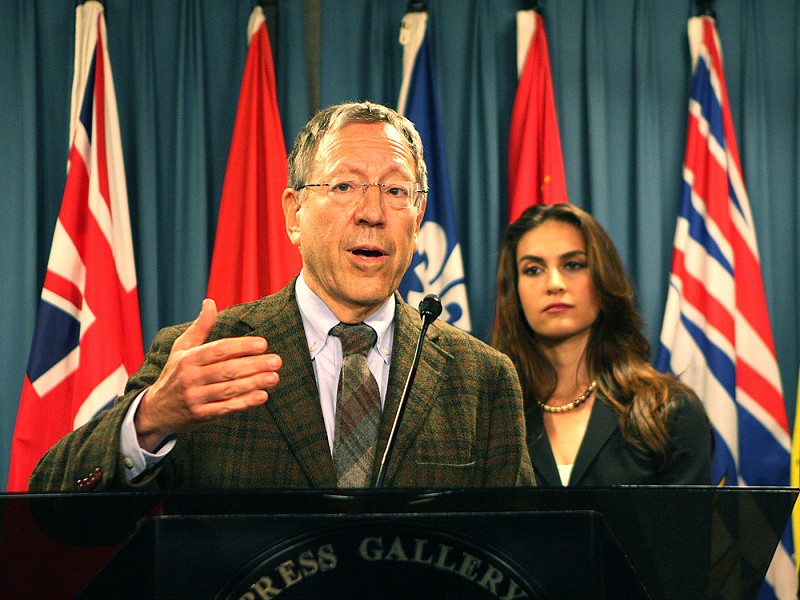
Harper meets with Ignatieff


After a crazy couple of weeks in
Parliament may have grinded to a halt, but the world around us did not. In
As the Canadian government decides what to do about the auto bailout, other economic indicators are of equal concern. Housing prices are slumping. Interest rates have been slashed to a 50 year low but banks are not passing on those savings to consumers. Credit availability is still a concern. Personal credit card debt and a lack of savings are becoming a threat to retirement as many baby boomers approach that age. Pension plans are taking a hit in the stock markets. The Canadian dollar and oil prices have declined drastically from where they were at the beginning of the election campaign. As oil prices drop, some projects may get delayed in the oil sands and elsewhere in
With all of these pressing concerns, our parliament is currently paralyzed and unstable. The Conservatives face potential defeat on the upcoming budget. Should this happen we are looking at a potential election or transition to a coalition government. Either way the government would be paralyzed for at least another six weeks meaning nothing would be done until April at the earliest to address the economy.
After a week of crazy events in
Stephen Harper and Michael Ignatieff, the onus is now on both of you to get past partisan politics and work together to demonstrate to Canadians that they can once again have confidence in their government. The state of the economy and the threats to this nation are far too important to continue playing these silly games. For that reason, I hope the meeting that took place today went well for the benefit of all 308 MPs who were elected to work for their constituents as oppose to themselves. We cannot afford an election. We cannot afford a coalition. Therefore that only leaves the option of working together. Get it done!
-Darryl
Wednesday, 10 December 2008
Time for partisan games is over...let's get to work on the economy
0 comments Posted by 2011 at 13:20
Time for partisan games is over...let's get to work on the economy
Congratulations to Michael Ignatieff for becoming the new leader of the Liberal Party. Following today's caucus vote, Stephen Harper and Michael Ignatieff should meet at the earliest possible opportunity. We have worked well with Michael in the past. It is time to put together a budget that addresses some of the economic challenges Canada faces. All 308 MPs have a duty to come back to the House of Commons with a more cooperative attitude to prove to Canadians that they are capable of addressing the issues that all of them were elected to address. January 27 is not that far away. The time for partisan games, coalitions and politics is over. We must now address the economy that is impacting real people from coast to coast. I look forward to Stephen Harper and Michael Ignatieff working together and getting something done for the good of this country. I believe that for the time being, we can work with this new leader of the Liberal Party.
-Darryl
***
"I think the big national parties should be working together to fix the economy, and we're more than willing to do that, and I hope the next Liberal leader, the first thing he'll do is be willing to sit down with me to have that discussion."
-Prime Minister Stephen Harper
***
Ignatieff steps in, Harper reaches out
http://www.cbc.ca/canada/story/2008/12/09/harper-interview.html
Full CBC Interview with Harper


Monday, 8 December 2008
Dion resigns officially
What a difference a day can make in politics. Monday it looked like Dion would become Prime Minister and 77 Liberal MPs all signed a letter to the Governor General saying they were united by the coalition under Dion's leadership. Today after trying to force Harper out of his job as leader, he finds himself turfed instead.
"I will take the decisions, were I to be given the honour to lead the party, on the 26th, when I've seen the budget."
-Michael Ignatieff
Hopefully the new Liberal leader will allow us to work together for Canadians on the budget. It is no secret that Iggy refused to accept a cabinet post in this coalition government and has been lukewarm on the prospect from the beginning.
-Darryl
***
For Release: Immediate
Statement by the Honourable Stéphane Dion
After the election on October 14 I announced I would stay on as Leader of the Liberal Party until my party could select my successor. One of my goals was to ensure an effective opposition to Stephen Harper’s government.
I believe that decision was the right one and I am proud of having forced Stephen Harper to back away from his attempt to force upon Canadians his most ideological and harmful plans in these tough economic times.
The alliance between the Liberal Party and the NDP to replace the Harper government, with the support of the Bloc Québécois, is a solid basis to give Canada a government that reflects both the aspirations of the majority of Canadians and the support of the majority of Members of Parliament. Such a government would be more stable than a minority Conservative government incapable of cooperating with opposition parties.
As the Governor General has granted a prorogation, it is a logical time for us Liberals to assess how we can best prepare our party to carry this fight forward.
There is a sense in the party, and certainly in the caucus, that given these new circumstances the new leader needs to be in place before the House resumes. I agree. I recommend this course to my party and caucus. As always, I want to do what is best for my country and my party, especially when Canadians’ jobs and pensions are at risk.
So I have decided to step aside as Leader of the Liberal Party effective as soon as my successor is duly chosen.
I will offer my unconditional and enthusiastic support to my successor in the same way I have always supported the leaders of our great party. I will work under the next leader’s direction with all my energy in order to give Canada a better government.
I wish to close by making it absolutely clear that my earlier departure does not change the facts of the situation that the Prime Minister has created in the last two weeks.
The Prime Minister and his government refused to lay out a plan to stimulate the economy. The Prime Minister has lost the confidence of the House of Commons. The Prime Minister shut down Parliament to save his job while thousands of Canadians are losing theirs. The Prime Minister has poisoned the well of trust and respect that is necessary for a minority government to work in Parliament - especially in a time of crisis.
Mr. Harper took an economic crisis and added a parliamentary crisis that he then tried to transform into a national unity crisis: this is no way for a Prime Minister of Canada to act.
It is my hope that the decision I have announced today will enhance the capacity of Parliament to function effectively for the sake of Canadians in this economic crisis.
Stéphane Dion, PC, MP

How can anyone take Bob Rae seriously
"To take away your chance to choose the person who leads you… it just doesn’t seem right"
-Bob Rae
Update: One more post from Mr. Rae...
"All weekend, I'd been hearing rumors about this, but today I was really surprised to read press reports about various MPs moving for an immediate vote to elect our Leader next Wednesday, in the Commons caucus.
I thought I'd seen a lot of politics over 30 years of public service, but this one really came from left field.
The idea of taking away the vote from tens of thousands of grassroots activists in every part of Canada, and reducing the franchise to just 76 men and women seems so out-of-step with the modern world. It makes you shake your head."
***

I'm One of the 67,924 That Want a Say in the Liberal Leadership
http://www.facebook.com/group.php?gid=55698732400&ref=nf
A Message From Bob:
As you know, our Leader Mr. Dion is stepping down, and Mr. Leblanc is exiting the leadership race. I want to thank both of them for their contributions, past present and future.
In light of the opportunity to defeat the Harper government and replace it with a new government of national economic unity, it is clearly now time to bring the leadership selection process to an earlier resolution. We need our new permanent leader in place by the time the House returns to debate the Conservative budget on January 26th, 2009.
This obviously means we need a different selection process from the one that was put in place to lead us to a Convention in May. Press reports have some suggesting that the entire leadership process should be replaced with a single, secret vote to be held in a closed meeting of the 76 MPs, next week. I think this is the wrong thing for our Party.
The party Executive is working on a viable, timely, cost-effective and constitutional means of enabling a one-member-one-vote democratic leadership selection. This can be in place swiftly, and you can make your voice heard in the selection of your Leader. I believe that ordinary Liberal volunteers must have a direct say in choosing the new Leader. That’s the only way to go.
You are the volunteers who make this Party a living force in the life of our country. Without you, there is no Liberal Party. You give your time, your talent, your financial support, and ask for nothing in return except the chance to contribute. To take away your chance to choose the person who leads you… it just doesn’t seem right.
As well, there are real questions about representation that we need to keep in mind. A simple vote of the Commons caucus would leave significant portions of our country’s diversity silent in the selection of our Leader. Because our caucus is concentrated in major urban centres, almost no rural ridings would be represented. Literally two Liberals between North Bay, Ontario and Vancouver, BC would have a vote in the MPs-only process. Most of francophone Quebec outside of Montreal would go unheard from. Defeated candidates would be disenfranchised. So would the party executive that you have put in place. So would our youth, women and aboriginals – who are under-represented in the Commons caucus. So would our long-serving Senators, who have given so much for our Party. That doesn’t seem right either.
Finally, there’s the question of what this kind of vote would mean for our party’s ability to grow. We have a chance to welcome Canadians into our political family. We need more of them to join us – especially in the places where our support has been declining. I favour a 308 riding strategy, not a 76-person vote. I have spoken out for using our race as a chance to grow this party; a closed caucus vote would take it in the opposite direction.
Let’s urge everyone in a position to influence this to put a stop to this hasty, ill-considered idea before it goes any further. I urge you to contact your nearest Liberal Member of Parliament, and any of the following, to let them know how you feel about this attempt to take away your vote:
Party President Doug Ferguson: doug@liberal.ca
Commons Caucus Chair Anthony Rota: Rotaa@parl.gc.ca
Sunday, 7 December 2008
Breaking News: Michael Ignatieff to become leader of the Liberal Party by caucus vote on Wednesday
0 comments Posted by 2011 at 16:42
Breaking News: Michael Ignatieff to become leader of the Liberal Party by caucus vote on Wednesday
According to a CTV 's Craig Oliver an announcement will be coming tomorrow that LeBlanc will drop out of the race and throw his support behind Ignatieff. A vote will take place in caucus on Wednesday to put Michael Ignatieff in as leader. Stephane Dion is done. Michael Ignatieff will become parliamentary leader of the Liberal Party and pressure will be placed on Bob Rae to step down as a "team player". Michael Ignatieff seemed to back away from the coalition while leaving it on the table at the same time. He did say he was open to seeing what was in the budget and would make a decision on January 27 on what to do. It will be interesting to see if there is any backlash from the grassroots about not having a say in the process. Another system of voting by phone or online was also proposed. It looks like Ignatieff will be installed leader based on a vote in caucus rubberstamped by the executive.
-Darryl
***
CTV Question Period Today